Explore
TOP ACTIVITIES




Manage
Support
GET THE APP

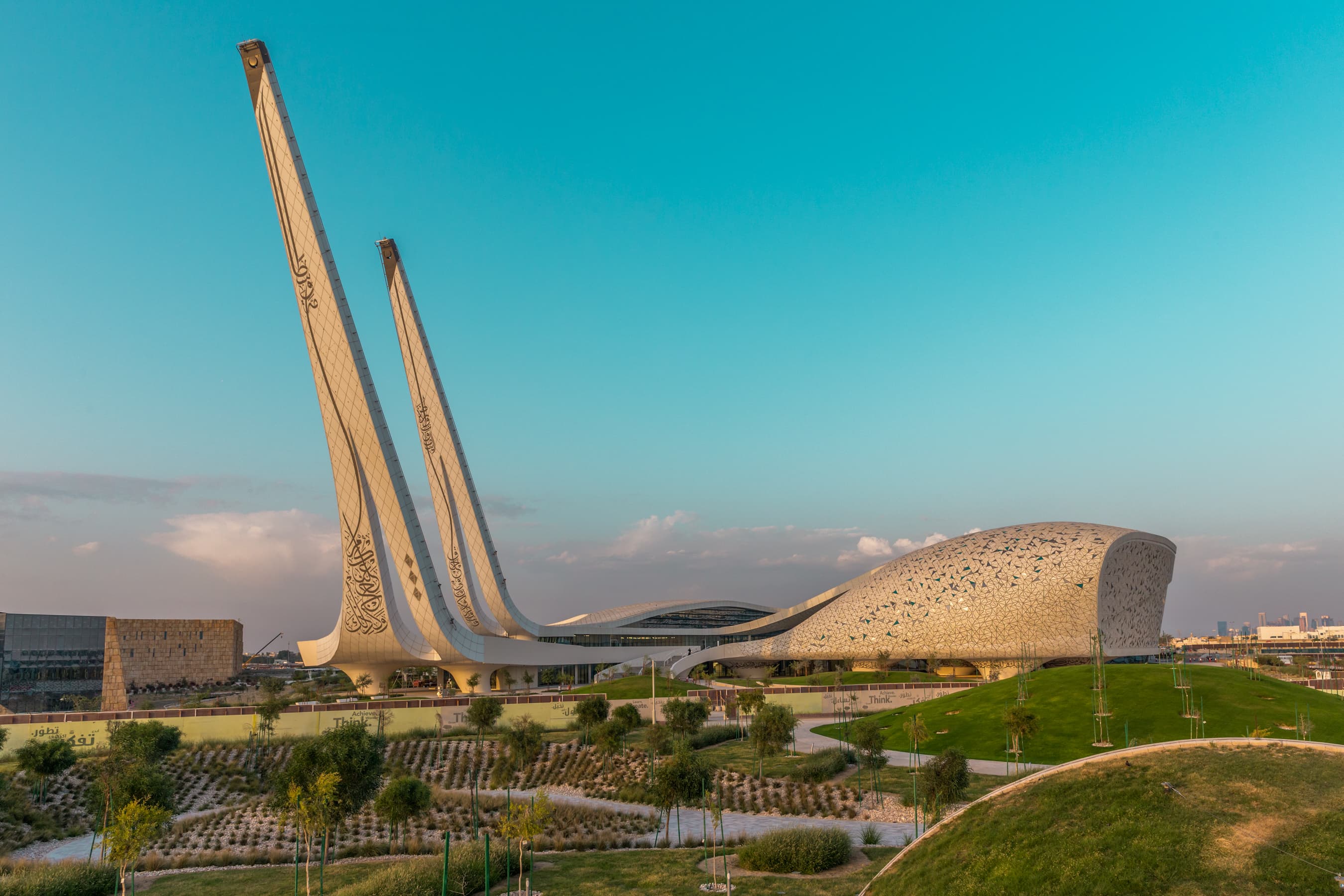
Minaretein and Education City Mosque
An architectural landmark that hosts a mosque, a center, and university colleges. Designed by Mangera Yvars (2013). Five pillars of Islam, two 90m minarets, 2800 capacity, four-story ablution cascade, Quranic Botanic Garden.
Public · Free
Non-Muslims welcome outside prayer times.
Modest dress required.
Open daily from Fajar prayer until 10am.
Quranic Botanic Garden
22,000 sqm. 60+ species from Qur'an and Sunnah. Sensory gardens (desert, water, sound, vineyard, children's). Botanical museum. Educational programs.
Public · Free
Daily 8am - 9pm
Main Library
Public · Free
Weekdays: 8am - 12pm
Friday: Closed
Saturday: 10am - 5pm
You notice the silence first. Not emptiness — presence. The Education City Mosque sits raised on five massive pillars, each inscribed with a verse from the Qur'an, and the effect is that you walk beneath the building before you enter it. Above you, the prayer hall seems to float. Around you, four streams channel water to a central garden, each representing one of the four rivers of Paradise described in the Qur'an: water, honey, milk, and wine. It's the kind of architecture that changes the way you breathe before you've crossed the threshold.
Designed by Mangera Yvars Architects and completed in 2013, the Minaretein building named for its two soaring minarets etched with ascending Arabic calligraphy is part of the Qatar Faculty of Islamic Studies at Hamad Bin Khalifa University. But it's far more than a campus building. The design is rooted in the concept of the Islamic kulliyya, the idea that all knowledge ultimately stems from faith. A spiral plan connects teaching spaces to the mosque through a series of pathways, separated by a four-story ablution cascade that cools the air and fills the approach with the sound of falling water. The result won the World Architecture Festival's Best Religious Building award in 2015, the American Architecture Prize in 2017, and a RIBA International Prize shortlist but the real achievement is simpler than any award: this is a building that makes you want to be still.
"The Kulliyya implies that knowledge and faith are interwoven but that all knowledge ultimately comes from faith. This relationship is explored through the infinite spiral building plan and multiple routes that bind faculty to mosque." — Mangera Yvars Architects
And because the Education City Mosque at Minaretein serves not only the university campus but the entire surrounding Al Rayyan community, its doors are open to everyone. Non-Muslims are welcome to visit outside prayer times, and the building regularly hosts lectures, interfaith dialogues, and community events. The Quranic Botanic Garden sits adjacent a contemplative collection of plants mentioned in the Qur'an and Sunnah that extends the mosque's philosophy into the landscape itself. Come for prayer, come for architecture, or come simply because you need a place where the world goes quiet for a while. The building doesn't ask what brought you. It just makes space.
Before you visit
The principle
Treat the space as any sacred building: curiosity, respect, open heart.
Friday prayers
Main congregational prayer. Headphone translation in multiple languages.
Prayer times
Don't enter prayer hall during active prayer unless joining. Observe from entrance or mezzanine.
Ablution areas
For ablution before prayer. Visitors observe only.
Voices low
Acoustics amplify sound — a whisper carries.
Shoes
Remove before entering prayer hall. Shoe storage provided.
Photography
Permitted but mindful of worshippers. Never photograph individuals without permission.
The mosque that asks you to look up before you enter
Most mosques invite you in through a door. This one asks you to walk beneath it. The Minaretein building is raised on five massive columns, each representing one of the five pillars of Islam — Shahada, Salah, Zakat, Sawm, and Hajj — and each inscribed with a verse from the Qur'an in calligraphy that draws the eye upward. The prayer hall hovers above, column-free inside, creating a sense of weightlessness that's hard to describe until you've stood in it. It's not just structural engineering — it's a statement about what a modern place of worship can feel like.
Mangera Yvars Architects designed the building around the concept of the Islamic kulliyya — a "place where all knowledge is sought." The spiral plan links teaching spaces at the Qatar Faculty of Islamic Studies to the mosque through pathways that symbolize the journey from learning to worship. Separating the two is a four-story ablution cascade — water falling through the center of the building, cooling the air and filling the approach with sound. The effect is that you don't simply enter a mosque. You move through layers of water, stone, and light until you arrive at the prayer hall, and by the time you get there, your pace has already slowed. That's not accidental. That's design.
Family
Children welcome
Building's scale fascinates young visitors. Encourage them to look up at the pillars.
Stroller access
Accessible throughout grounds. Mosque interior accessible but shoes off.
Qur'an classes
Memorization classes for children — check program.
Accessibility
Wheelchair access
Smooth pathways and ramps. Prayer hall via elevator.
Restrooms
Accessible restrooms in the complex.
Quranic Botanic Garden
Flat throughout, shaded seating along pathways.
Staff
Reception can assist with any accessibility needs.
The towers that glow at dusk
The name Minaretein means "two minarets" in Arabic, and they're the building's signature. Stretching 90 metres into the sky and aligned directly toward Makkah, the twin towers are wrapped in ascending Arabic calligraphy — a visual call to prayer that works even in silence. At dusk, when the minarets catch the last light and the inscriptions begin to glow, the effect is quietly breathtaking. It's the detail visitors photograph most, and the one they mention first when describing the building to someone who hasn't been.
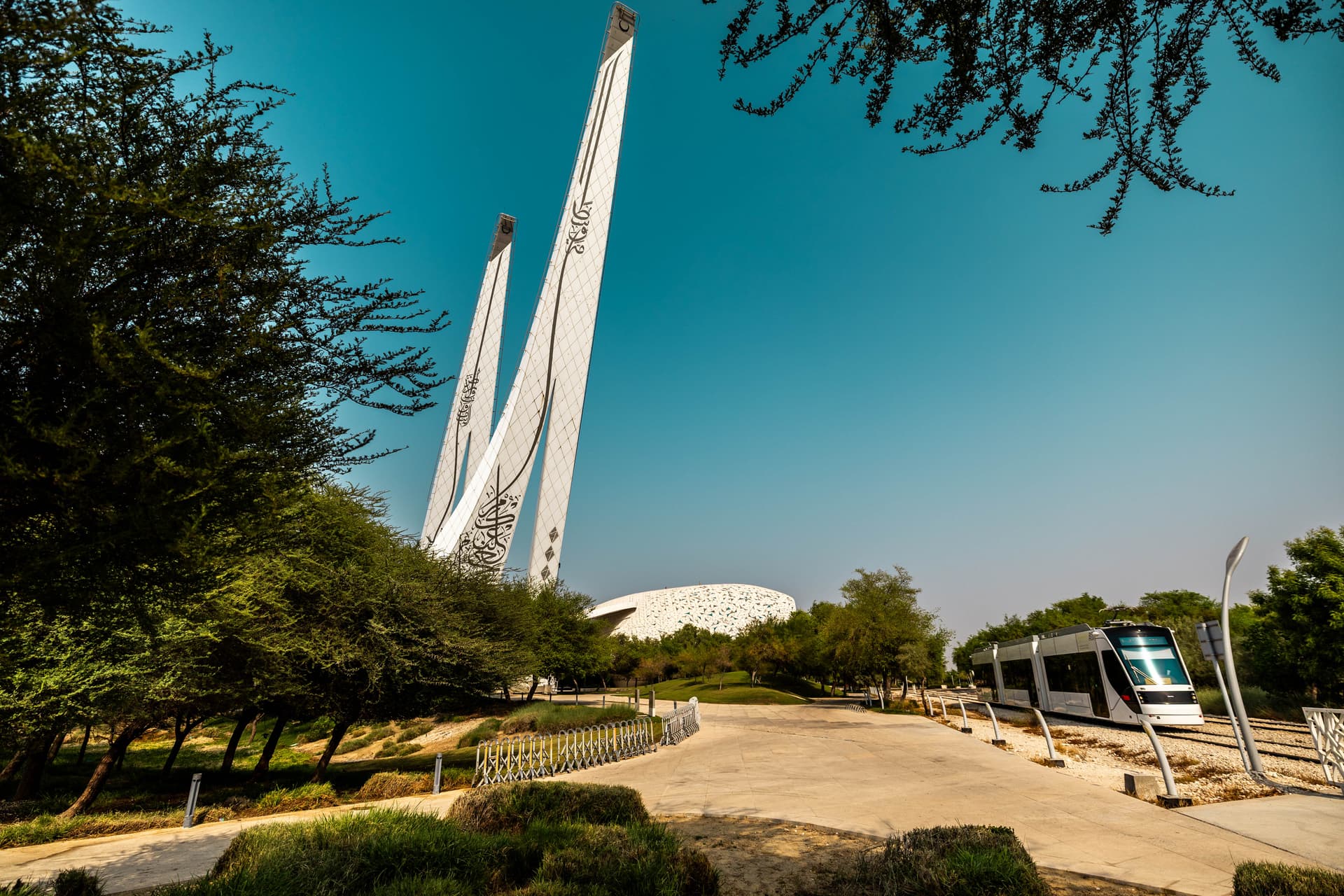
But the minarets aren't just symbolic. They anchor a building that has won some of the most respected architecture awards in the world: Best Religious Building at the World Architecture Festival in Singapore (2015), Best GCC Project and Best Social Infrastructure Project at the MEED Awards (2015), the American Architecture Prize for Cultural and Institutional Architecture (2017), and a RIBA International Prize shortlist (2016). This building belongs on the same itinerary as the Museum of Islamic Art and the National Museum. It's that caliber of architecture, and it's free.
Qatar Botanic Garden
Species
60+ plants from Qur'an and Sunnah: Sidra, olive, fig, pomegranate, camphor, ginger, date palm.
Sensory gardens
Desert, water, sound, vineyard, and children's gardens.
Botanical museum
Heritage artefacts and traditional tools inside.
Children's garden
Quieter complement to Oxygen Park — learning through touch and smell.
Guided Tours & Community
More than a mosque, Minaretein is a center for learning, dialogue, and community connection. Alongside daily prayers, the space welcomes visitors through guided tours, lectures, interfaith conversations, cultural programs, and community activations — making it both a place of worship and a meaningful gathering point within Education City.
Marhabtein: A Guided Tour of the Education City Mosque
Discover the beauty, meaning, and inspiration behind one of Qatar's most iconic mosques through a welcoming guided tour open to all. The tour is open and free to everyone regardless of faith, nationality, background, or prior knowledge.
Who can attend?
Everyone
Age group
All ages
Price
Free
Duration
Approximately 45 minutes
Language
English
Participants under the age of 18 must be accompanied by a parent or legal guardian.
Minaretein Educational Program
The Minaretein Educational Program offers a holistic approach to Qur’anic education, combining memorization and recitation with the practical application of Islamic values in everyday life. Designed to nurture knowledge, character, and faith, the program provides a supportive learning environment where students can deepen their understanding of the Holy Qur’an while developing strong moral and personal foundations. Classes are offered in separate boys’ and girls’ sections, each led by teachers of the same gender.
Age group
Ages 7+
Gender
Gender based courses
Language
Arabic · Teachers are able to support in English when needed.
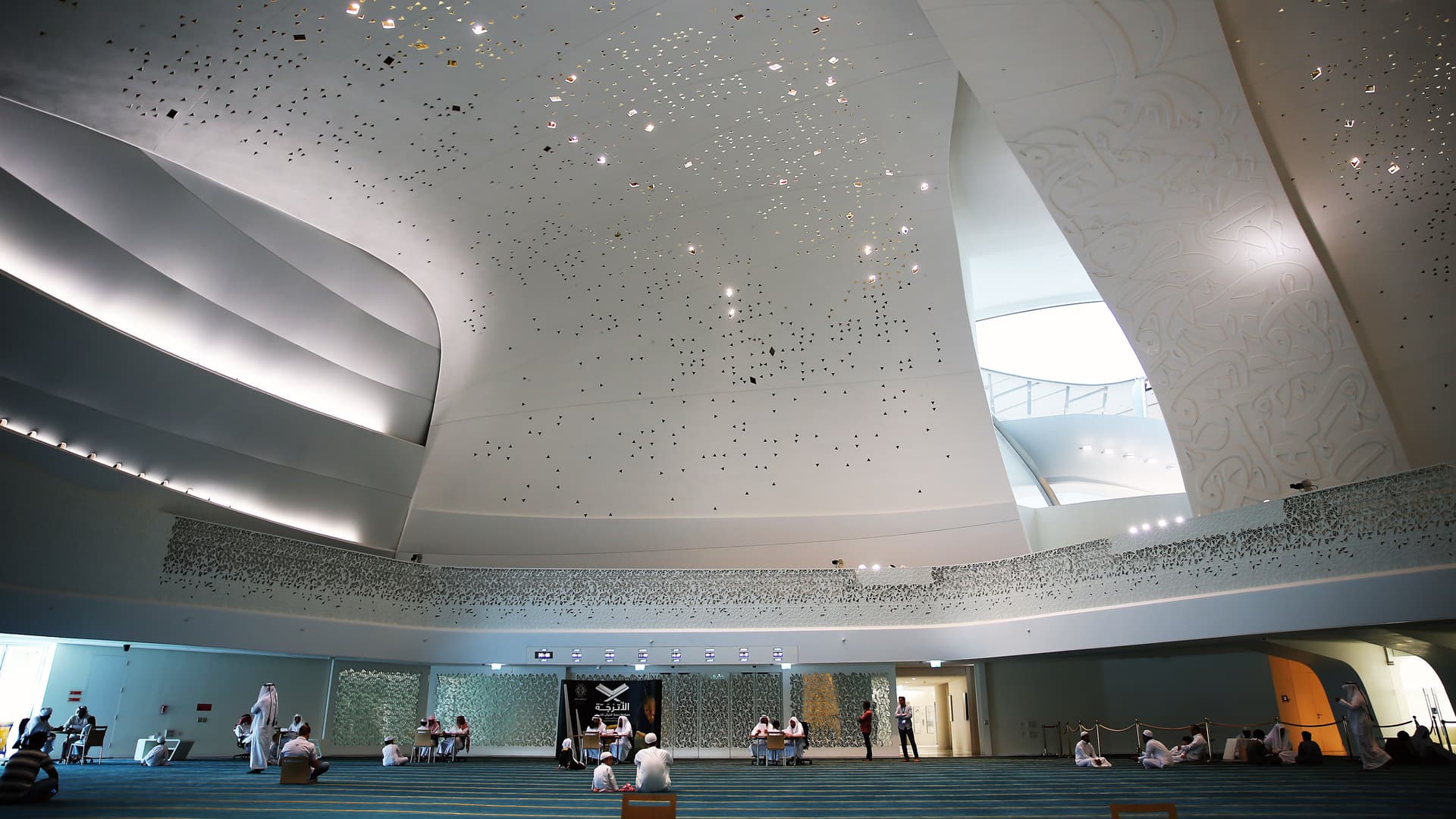
Minaretein's Programs & Events
Minaretein’s programs and community events bring Islamic learning to life through a wide range of initiatives that enrich knowledge, strengthen character, and deepen faith. From Qur’an and Arabic studies to lectures, dialogues, youth programs, and family activities, these experiences connect timeless Islamic values with contemporary life, creating opportunities for learning, reflection, and meaningful community engagement.
Green Line to Education City station. Connect to free EC Tram (Yellow Line), get off at Education City Mosque stop.
Yellow Line stops at Education City Mosque stop, directly adjacent.
Dedicated parking is available in the Education City Mosque car park, just steps from Minaretein.
Uber and Karwa drop at mosque entrance. Recommended for evening visits.